

Zukiswa Potye talks transformation in community media sector
Community media plays a critical role in communities in ensuring there is sufficient dissemination of credible news to the audiences they serve, taking indigenous languages into consideration to accommodate scores of audiences they serve in these communities.
This is achieved through selfless contributions made by the owners of these media entities and their staff of journalists, under tough conditions and sometimes, without salaries to keep them going while they continue to bring quality and credible news. This is why the intervention of the organisations like the MDDA (Media Development and Diversity Agency), continue to play a critical role in the establishment of these small community news entities, to develop, diversify and provide them with the necessary tools to enable them to serve communities.
THEDEAL Magazine recently spoke with Ms Zukiswa Potye, Chief Executive Officer of MDDA, to understand the impact her organisation continue to make in developing these community and small commercial media entities with key skills and necessities for growth.
1. Can you briefly share a little bit about yourself, and what you do at the MDDA?
I come from a very big family of (9) nine. My twin and I are the first- born girls. I have two children. All I can say is that I have been driven all my life. When I do something, I give it my all. I am fun loving, and pleasant person to ever deal with. I have a lot of respect for people and have a positive outlook towards life, generally. I am known to be very strict or firm if you like, do not take kindly to lazy people, and have no tolerance for people that do not walk in the truth. Fraud and corruption are two things that upset me as they deprive millions of South Africans, basic living services.


2. Briefly talk to us about your background and your journey to become a leader of this organization?
Growing up I wanted to be a Chartered Accountant. In fact, I thought I would be among the first Black Female Accountants in SA. It was not to be. I failed to get into University for financial reasons after matric. It left me heartbroken because I was the Student of The Year when I passed matric in 1991. I therefore started my career as a Clerk in a Law Firm in 1992 and did administration for the next eight years. I got my first break when I was appointed as a Project Officer at the National Electricity Regulator (now NERSA) in 2001. That marked my last years in administration. In 2003 I won the Chief Executive Officer’s Performance Award for going beyond the call of duty in doing my work. This was 18 months into the job. I then enrolled for an Advanced Diploma for Project Management at Cranefield College in 2002. In 2003 I did a Post Graduate Diploma in Project Management, a qualification I pursued till I graduated a Master of Commerce majoring in Project Management in 2012. I have also done a few other courses and intend studying more in the near future.
I think it is my work ethic, dedication to serve the people of South Africa and my sheer willingness to learn that I demonstrated in my previous positions that led me to the current position. For an example, prior to the MDDA I had been at the GCIS for 10 years as a Chief Director responsible for Corporate Planning, Monitoring and Evaluation and Risk Management. Prior to that I was at Transnet as Corporate Affairs Coordinator and at Blue IQ as a Programme Manager for Monitoring and Evaluation. I work to excel in every position, and to make some impact.
3. The MDDA advocates for the development local media entities and to ensure diversity is realized. Has the agency been able to achieve that mandate, and if so to what extent?
The answer to this question is; Yes and No. We conducted an impact study in 2016/17 and the results were that, to a large extent we have achieved our mandate of ensuring media is owned, managed, and controlled by previously disadvantaged groups. To date, South Africa has more than 270 community radio stations, 6 community televisions and more than 200 publications - from almost Zero prior to 1994. We must celebrate this achievement as a country. The NO part of this answer relates to what we are now trying to tackle, Sustainability of the Sector. Many entities struggle to sustain themselves without government support. We shall, in the coming 10 months,
conduct a sustainability research with the aim to understand more deeply the root causes for this lack of sustainability, mobilise resources, and then build a Sustainability Model by end of 2022.
4. What has the relationship been like with the local/community media that your organization is tasked to look after? What challenges you picked up from these entities?
The relationship has been great with our stakeholders. We want to work more on improving these relations, it is very important to us. The challenges are generally the lack of funding sources our entities can tap into when government cannot assist them. Mechanisms to generate revenue, etc. Governance and skills that are geared for the entities to produce news and content geared for the 4IR era and rapid enough for times of the pandemic. We are now talking about producing premium content, that we can package for different platforms. We have a digital migration strategy. We are also looking at cost-effective options for signal transmission which is a major cost for community broadcasters.
5. In terms of compliance, a lot of local/community media is left behind when it comes to opportunities, especially advertising. How are you ensuring that there is adequate compliance across, and they benefit from the private and public sector advertising opportunities and how does MDDA advocate for them from the advertising media buying agencies and brands?
Once we have improved the levels of compliance with relevant laws and improved the governance of these entities, we will be able to attract revenue from local and national business (public and private sector). The MDDA has a training and capacity building interventions planned and implemented annually. We have signed Memoranda of Agreements with organisations like Seda, the MICT Seta, etc., to implement some of the interventions. We are looking at coaching and mentoring interventions, etc.
We are also concluding a Fundraising Strategy that the Board will consider in March this year. Once approved, we will even look for international donors to support the sector.
6. Community, small commercial and campus media have a niche market of audience they serve, and the COVID-19 pandemic took its toll on these entities. How did the MDDA agency assist these entities to ensure they continue with their work to keep the communities informed and education with credible news?
The MDDA Board approved R20 million at the end of March 2020. We have disbursed R16 million to qualifying and compliant projects by the end of October 2020. We have thus supported hundreds of entities both in Phase I and Phase II. This was disbursed in small packages of R45 000 in the first tranche and R60 000.00 for community radio stations, R290 000 for television stations and R20 000 for print projects in the 2nd tranche. The aim was to ensure community and small commercial media was still able to discharge their mandate during the pandemic, in a safer manner; hence we provided for hiring of cars, procurement of PPEs, data and refuelling. In the 2nd tranche we also provided for salaries and stipends, including rentals or bond repayments for those that needed it.
7. As the world moves to the 4IR, is the MDDA adapting and embracing the advances that technology brings in accessing news compared to the traditional methods of delivering news?
Yes, the MDDA completed a Digital Migration Strategy at the end of October 2020. We have now developed a three-year implementation plan. We will share these with the Sector in due course.
8. What are your three (3) biggest accomplishments since being part of the MDDA family and also, what has been your most challenges?
In 2018 we held a Community Media Summit. We developed a report with an action plan after the summit. We then consolidated all findings of previous stakeholder engagements and conceptualised a Consultative Conference on Sustainability which took place in August 2020. The Consultative Conference was to consult and agree with the Sector on the areas of the research on sustainability. The tender for this closed on 08 January 2021. We are hoping to appoint a Service Provider that will drive the research before the end of March 2020. At the end of the research, we will be building a Sustainability Model which we want to launch in January 2023, when the MDDA turns 20. In 2022 we may have an opportunity to pilot the Sustainability Model.
We have revisited our support from the Commercial Print Sector, and we have draft MoUs on certain concessions like printing discounts, access to printing paper, etc. We have signed MoAs with Seda, the MICT Seta; have had several discussions with NEMISA, Wits Academy, etc.
In 2019, the Board approved the MDDA’s First Grant Funding Policy of the organisation. The policy sought to make transparent, responsive, and equitable, the manner in which the entity supports projects. It also streamlined the internal processes.
9. What are the MDDA plans to advance the small commercial and community media as we are start off a new year? What can we look forward to in terms of development?
Unfortunately, small commercial media and the community print do not receive external funding and the funding the MDDA receives from government is being cut or reduced, starting in 2020. This therefore calls on us to expedite the fundraising and other strategies that can sustain the sector. Even though the small commercial media and community print are in a worse position, they are not worse off than their broadcast sisters who have to contend with even higher operational costs. So, when we lobby for funding, we will do for the entire Sector.
SHARE THIS STORY ANYWHERE YOU LIKE
SHARE THIS STORY ANYWHERE
LATEST NEWS
LATEST NEWS
SPAR celebrates South Africa’s women entrepreneurs as Her Perfect Pitch Season 5 crowns its winner
SPAR celebrates South Africa’s women entrepreneurs as Her Perfect Pitch Season 5 crowns its winner On the photo: Winner, Tshaamano
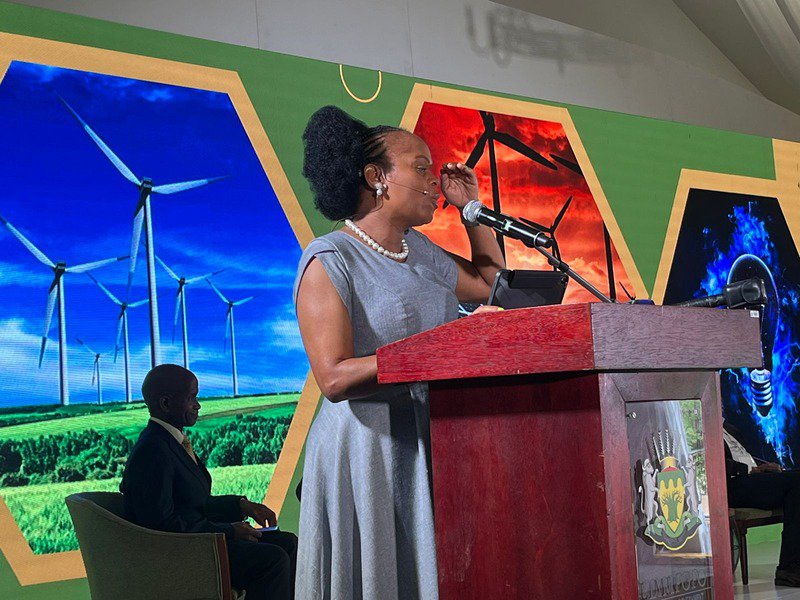
From Pledges to Prosperity: Limpopo Sets Its Sights on Implementation at the 2026 Investment Conference
From Pledges to Prosperity: Limpopo Sets Its Sights on Implementation at the 2026 Investment Conference On the photo: Limpopo Premier,
Standard Bank Joy of Jazz kicks off with free jazz concert
Free the Jazz: A New Generation of Jazz Takes Centre Stage This Heritage Day Jazz lovers, music enthusiasts and culture